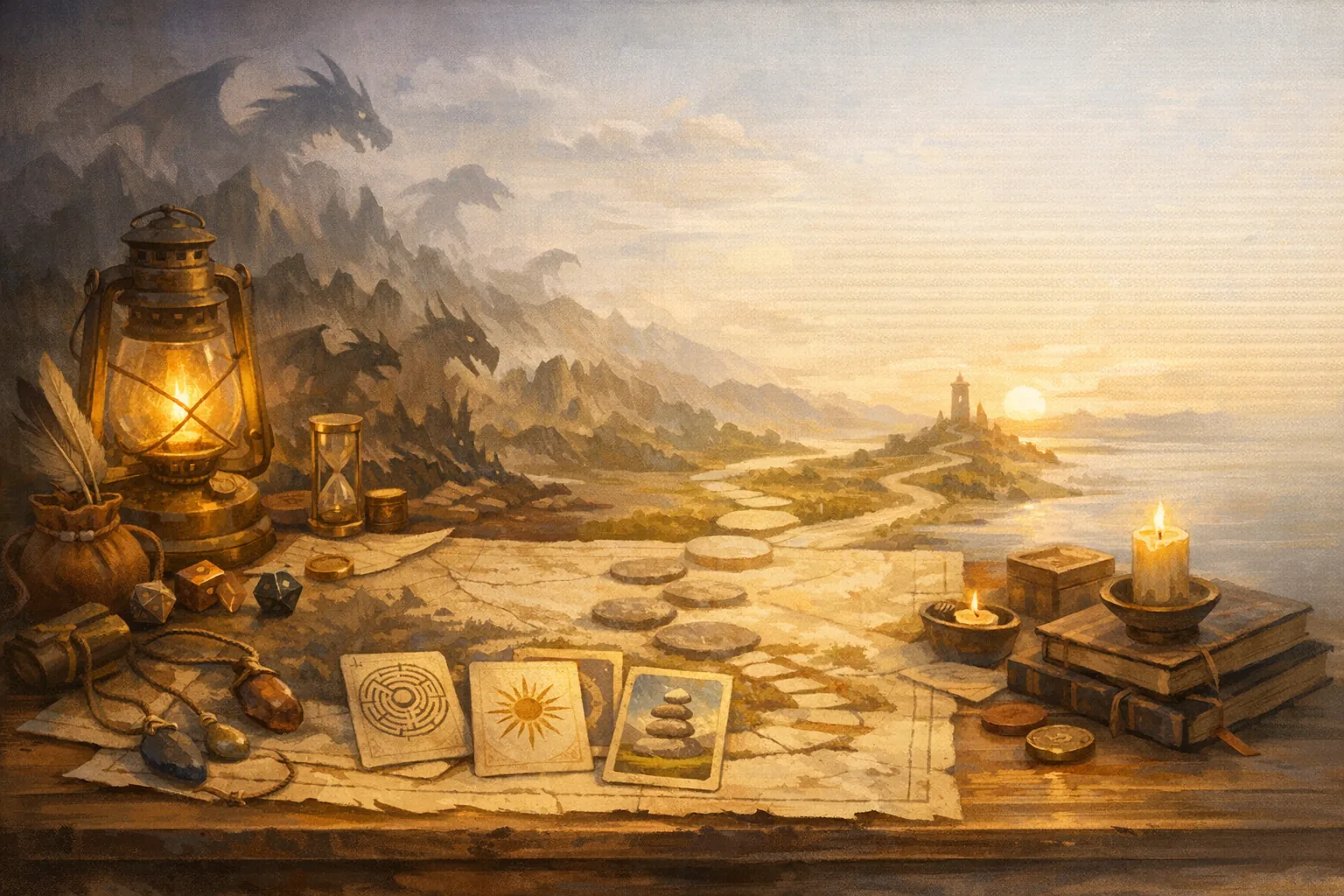
Start here
A fantasy toolkit for real executive-function battles
Name the stuck feeling, choose the monster, and take one practical step without losing the wonder.
If overwhelmed, start here. One monster match is enough for now.
How it works
Three promises
Practical first
Every major path points you toward one ritual and one tool before asking you to read the full lore.
Built for pattern recognition
The monsters exist so you can recognize a struggle quickly, not blame yourself for having it.
Low-friction support
Printables, scripts, and tiny first moves are here for the days when thinking bigger actually makes things worse.
Grounding
Built for neurodivergent overlap, not just one label
This project is rooted in ADHD and executive dysfunction, but the tools can also help with shutdown, burnout, transition friction, rejection sensitivity, or sensory overload. Use what helps. Ignore what does not.
Warm, not clinical
The voice is playful on purpose. Humor and metaphor can lower shame and make a hard pattern easier to face.
Grounded, not magical thinking
Most rituals here are built from real support strategies: externalizing, cueing, body doubling, reducing friction, and making the next move visible.
Not therapy
This site is a practical companion, not a diagnosis, treatment plan, or substitute for professional mental health care.
About the creator
Made by someone who also needed the map
Dragons & Distractions was built by Justin Shank, a writer, maker, and pattern-goblin who wanted executive-function support to feel less like a clinical worksheet and more like a map you might actually keep nearby.
The idea is simple: when a stuck feeling has a name, it gets easier to face. Task Hydra. Dopamine Goblin. Temporal Shark. Burnout Dragon. The monsters are not here to make the struggle cute — they are here to make it recognizable, less shame-loaded, and easier to answer with one practical move.
Every part of the toolkit points back to the same promise: one monster, one ritual, one workable next step. Use what helps. Ignore what does not. Come back when the next beast starts chewing on the furniture.