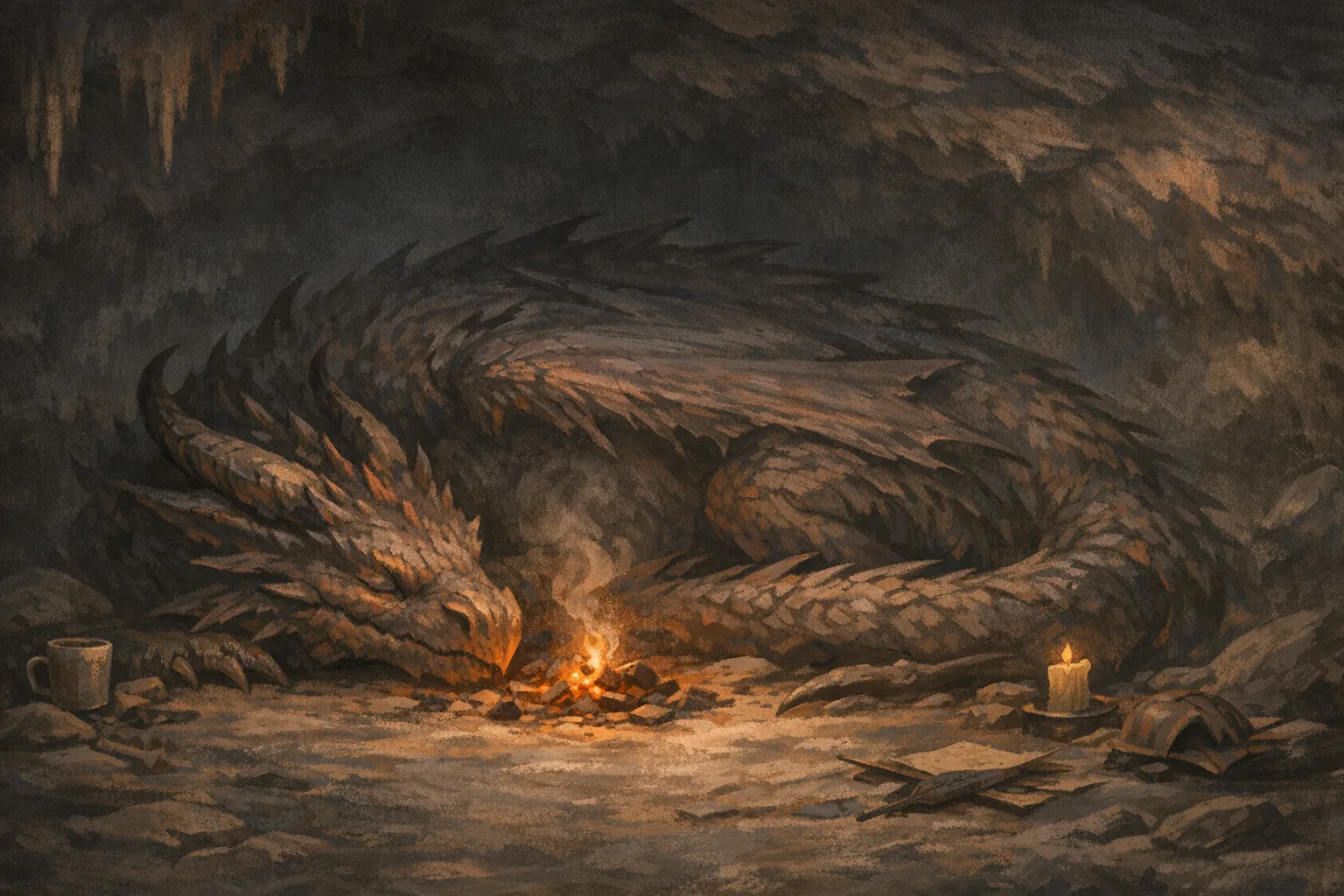
Field Guide Match: burnout, deep depletion, and task collapse
The Burnout Dragon
When everything costs too much
Burnout Dragon appears when your reserves are so low that ordinary tasks feel expensive, recovery keeps getting deferred, and even useful plans start to feel like demands.
Start here
Practical help before the lore
Burnout Dragon appears when your reserves are so low that ordinary tasks feel expensive, recovery keeps getting deferred, and even useful plans start to feel like demands.
You might be here if...
- Everything feels heavier than it used to, even simple things.
- Rest does not seem to refill you because the pressure never really stops.
- You need fewer expectations, not better productivity hacks.
Best first ritual
Cut the day down to essentials, protect one recovery action, and stop pretending you have capacity you do not have.
Fastest tool
A readable worksheet page for naming today's real capacity, minimum needs, and what gets deferred before you print.
- Triggers: long stress cycles, chronic overcommitment, no recovery margin, caregiving load, masking, and demands that keep arriving after your reserves are gone.
- First counter-move: define today's minimum viable day before the guilt writes a fantasy schedule.
- Printable: Minimum Viable Day sheet (ink PDF)
Lore
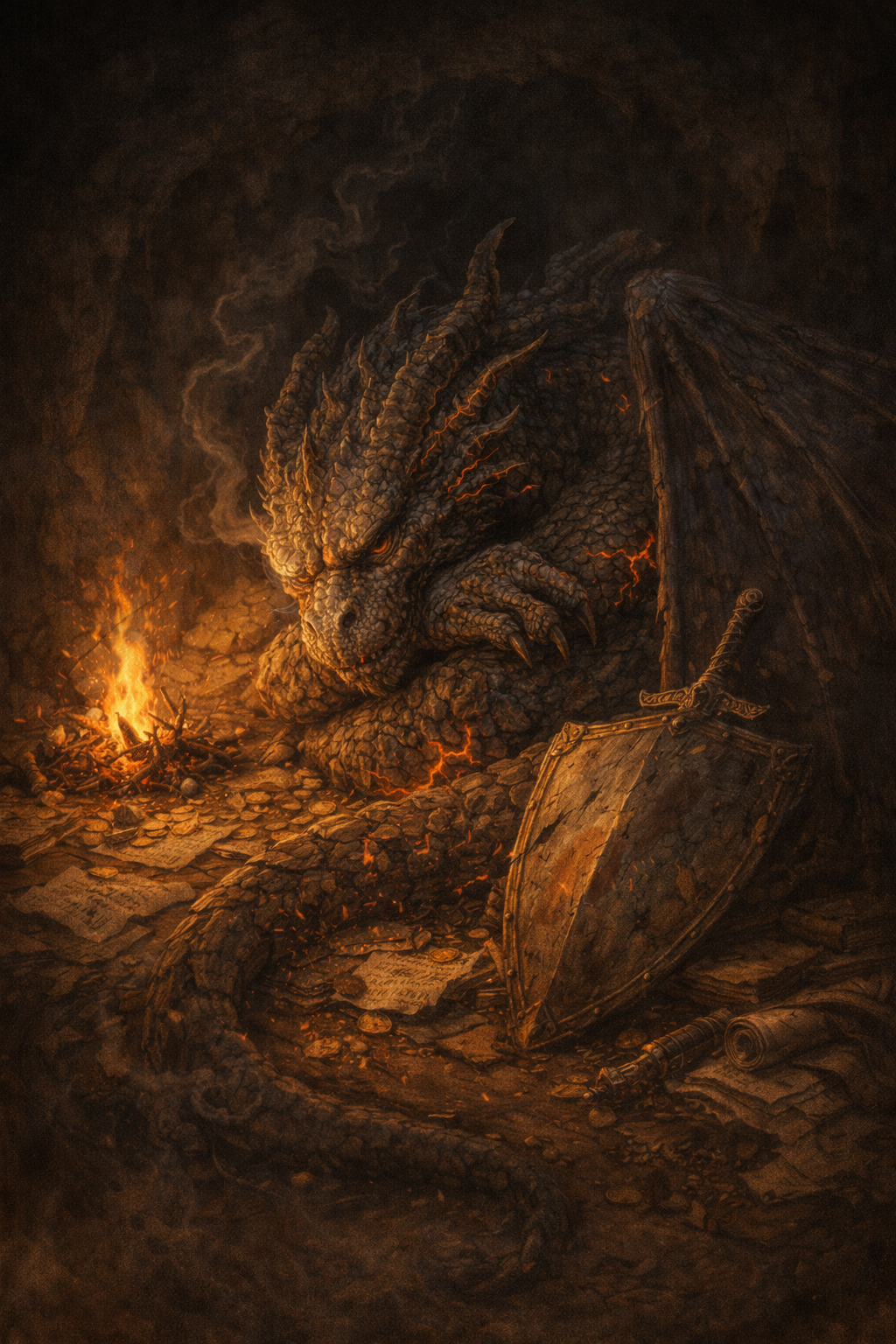
The Burnout Dragon is not dramatic at first. It begins as smoke in the rafters. A little less margin. A little less joy. A little more cost for everything. Then one day the whole cave is hot and even the smallest task asks for more fuel than you have.
The Dragon is dangerous because it convinces you that the answer is better discipline. Usually the answer is less fire.
In older stories, dragons hoarded gold inside a mountain and slept on it for centuries. The Burnout Dragon hoards you: your hours, your attention, your reserves. Every “yes” you did not actually have the capacity for is a coin on the pile it is sleeping on. Recovery is not about slaying it. It is about taking back enough of the pile that you can stand up again.
Monster Ecology
- Burnout often hides behind language like “I just need to get it together.”
- Depletion changes attention, patience, memory, and emotional resilience.
- Productivity tools help less when the core problem is overdrawn capacity.
- Naming the true energy budget is often the first real intervention.
- Chronic demand without recovery is a load problem, not a character problem.
- “Rest” that never lowers the underlying pressure does not refill the tank.
Real-World Examples
- Opening your laptop, staring at the first task, and finding that your thoughts will not start.
- Taking a full weekend off and still feeling tired on Monday because the pressure never actually paused.
- Snapping at someone you love over a small thing, then realising you had nothing left in the cup.
- Reading the same paragraph four times because your attention is running on fumes.
- Making a lovely plan for tomorrow that silently assumes an energy level you have not had in months.
- Calling yourself lazy for needing rest your body has been asking for since last season.
The Burnout Dragon’s Weaknesses
- Reduce demands before optimizing them.
- Separate “must happen” from “should happen.”
- Build the day around recovery and safety, not ideals.
- Stop borrowing energy from tomorrow if today’s tank is already empty.
- Treat capacity as real information, not a moral issue.
- Let small ember-keeping acts count: water, food, a window open, one kind word to yourself.
Rituals and Counter-Spells
Minimum Viable Day
- List the absolute essentials: food, medication, one communication, one task at most.
- Everything else becomes optional or deferred by default.
Ember Check
- Ask: what do I still have enough energy to protect?
- Choose one tiny recovery action that keeps the last ember alive.
Capacity Gates
- Before saying yes, ask whether the task fits today’s fuel, not yesterday’s identity.
Cave Mode
- When the fire is this low, shrink the cave. Fewer rooms, fewer people, fewer screens.
- Defend one quiet corner even if the rest of the day is loud.
Find the practical write-up in the Rituals page.
Tools and Printables
- Minimum Viable Day sheet
- Ink-friendly PDF
- If your burnout is mixed with sensory overload, pair this with Sensory Storm.
- If retreat has tipped into full hibernation, see Cave Bear for a gentler re-entry.
Command Phrases
- “Less fire, not more discipline.”
- “Capacity is information, not a verdict.”
- “I am protecting the ember, not performing the day.”
- “Today gets the minimum viable version of me, and that is allowed.”
- “No borrowing from tomorrow.”
Science and Reason
- Chronic stress without recovery narrows attention, impairs memory, and flattens motivation — burnout is a whole-system state, not a mood.
- Depletion reduces executive function capacity, which is why “just push through” tends to fail exactly when it is most needed.
- Recovery works best when the underlying load is reduced, not only when rest is added on top.
- Small, repeatable recovery actions (hydration, food, brief walks, social safety) compound more reliably than rare dramatic resets.
(For a fuller support boundary, see the note near the top of this page. Burnout that is affecting safety, health, or work deserves real-world help.)
Challenge for the Reader
- Name today’s Burnout Dragon out loud: what is actually depleting you?
- Write your Minimum Viable Day on paper, not just in your head.
- Pick one “should happen” task and move it off today on purpose.
- Choose one ember-keeping action and do it before anything productive.
- At the end of the day, notice whether the sky fell. It usually does not.
“You do not slay the Burnout Dragon. You stop feeding it, one unnecessary fire at a time, until the cave cools enough for you to breathe.”