Field Guide Match: sensory overload, saturation, and shutdown risk
The Sensory Storm
Too much input, not enough shelter
Sensory Storm appears when sound, light, texture, motion, or social input pile up until your body starts protecting itself by scattering, freezing, or shutting down.
Start here
Practical help before the lore
Sensory Storm appears when sound, light, texture, motion, or social input pile up until your body starts protecting itself by scattering, freezing, or shutting down.
You might be here if...
- Noise, brightness, touch, or too many people are making it hard to think.
- You are getting snappier, foggier, or more fragile by the minute.
- Relief comes faster from reducing input than from trying harder.
Best first ritual
Lower one major input, add one sensory anchor, and give your body a smaller environment before asking it to function.
Fastest tool
A readable reset page for naming the input, reducing it, and choosing the next smallest safe move.

- Triggers: loud rooms, bright lights, itchy clothing, competing screens, strong smells, or too much social contact without recovery space.
- First counter-move: reduce one input before trying to keep up with the task.
- Printable: Sensory Reset card (ink PDF)
Bestiary Entry
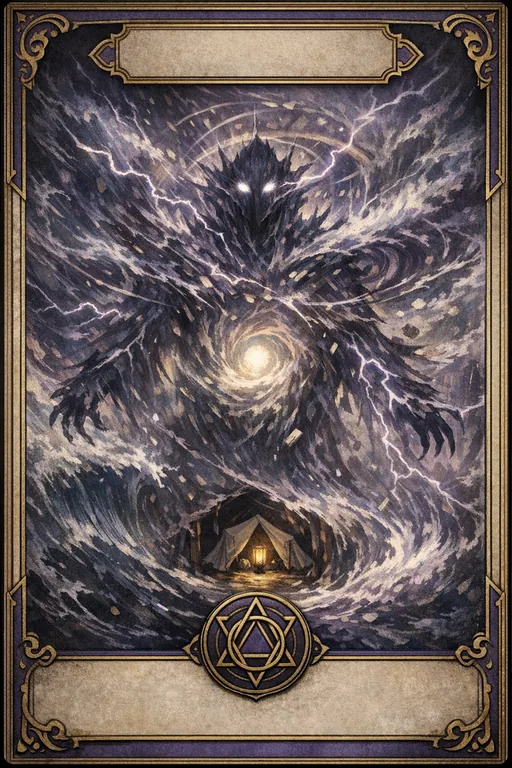
The Sensory Storm does not ask permission before it rolls in. It thickens the air, sharpens every edge, and turns ordinary input into weather. Light gets louder. Noise gets closer. Fabric feels hostile. Conversation becomes hail.
When the Storm takes the sky, your nervous system starts choosing safety over performance. That is not laziness or failure. It is weather response.
Monster Ecology
- Sensory overload often looks like irritability, distraction, shutdown, or escape.
- Too much input can make executive function collapse even when the original task was manageable.
- Regulation usually starts with changing the environment, not lecturing yourself.
- One lowered input can create enough space for thinking to return.
The Sensory Storm’s Weaknesses
- Reduce one major input fast instead of enduring all of them at once.
- Use a single anchor: cold water, pressure, one steady sound, one dimmer light.
- Shrink the environment before you plan the next task.
- Name “overloaded” early so you do not confuse it with a character flaw.
- Protect recovery time after the storm passes.
Rituals and Counter-Spells
Reduce Inputs First
- Pick the loudest, brightest, sharpest, or most socially demanding input.
- Lower that one first: headphones on, lights down, step outside, remove the scratchy layer.
One-Sense Anchor
- Give your body one simple thing to orient to: cold drink, heavy blanket, steady playlist, closed eyes, hand on table.
Shelter Build
- Move to the smallest workable environment.
- If the task matters, bring only the next tiny action into shelter with you.
Find the practical write-up in the Spellbook.
Tools and Printables
- Sensory Reset card
- Ink-friendly PDF
- If the Storm is followed by retreat or exhaustion, pair this with Cave Bear or Burnout Dragon.